Sometimes an object carries far more history than its size would suggest.
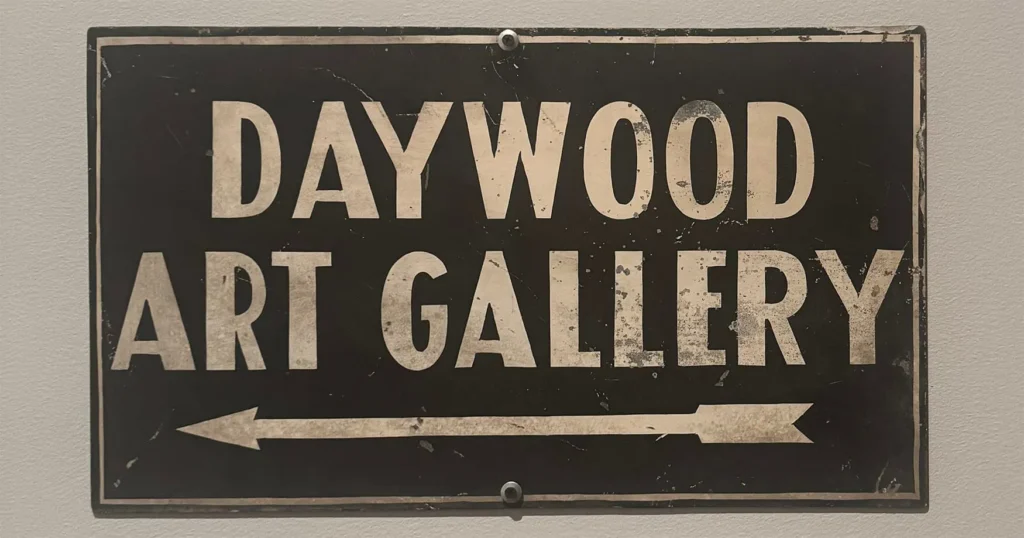
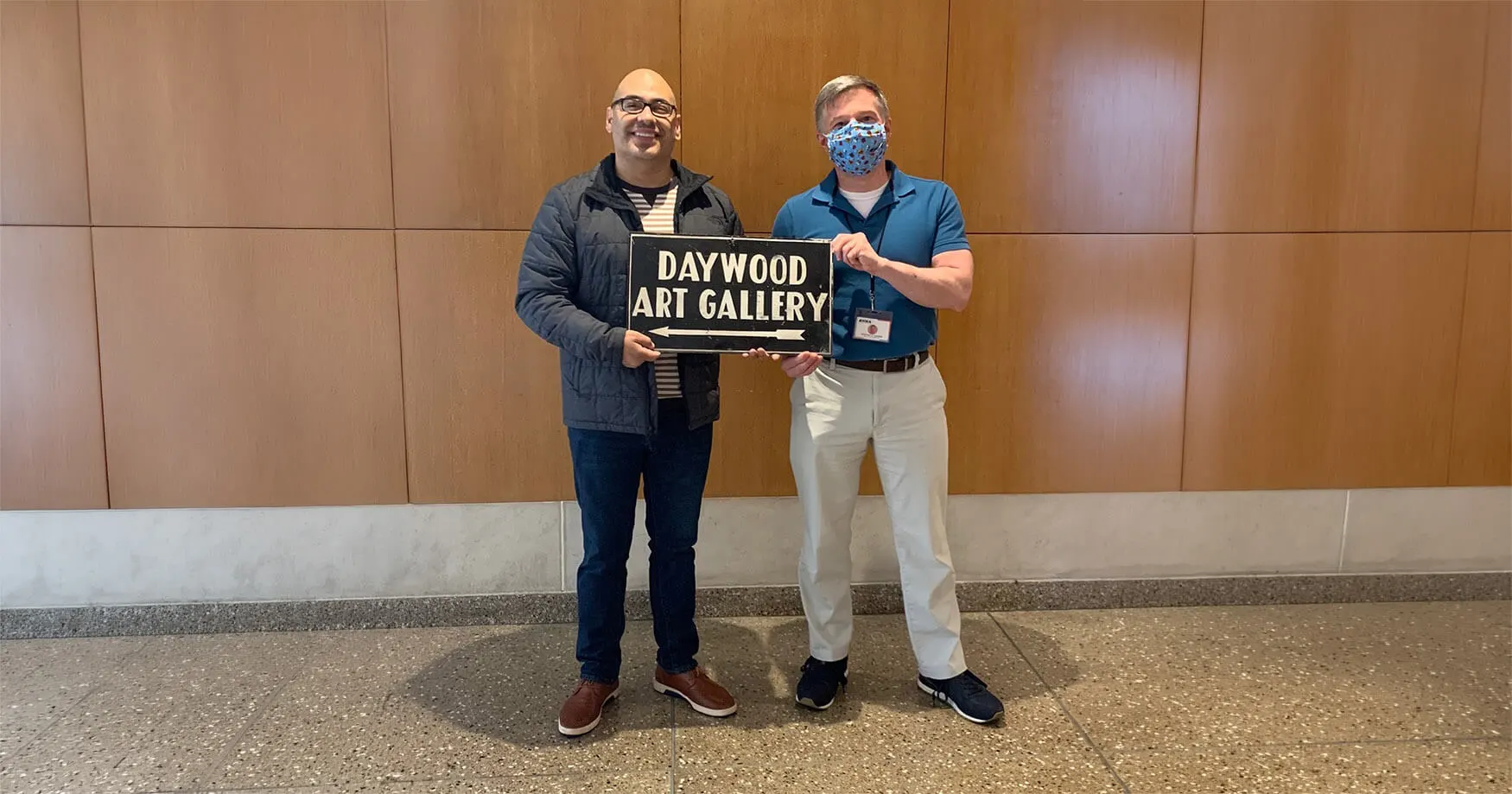
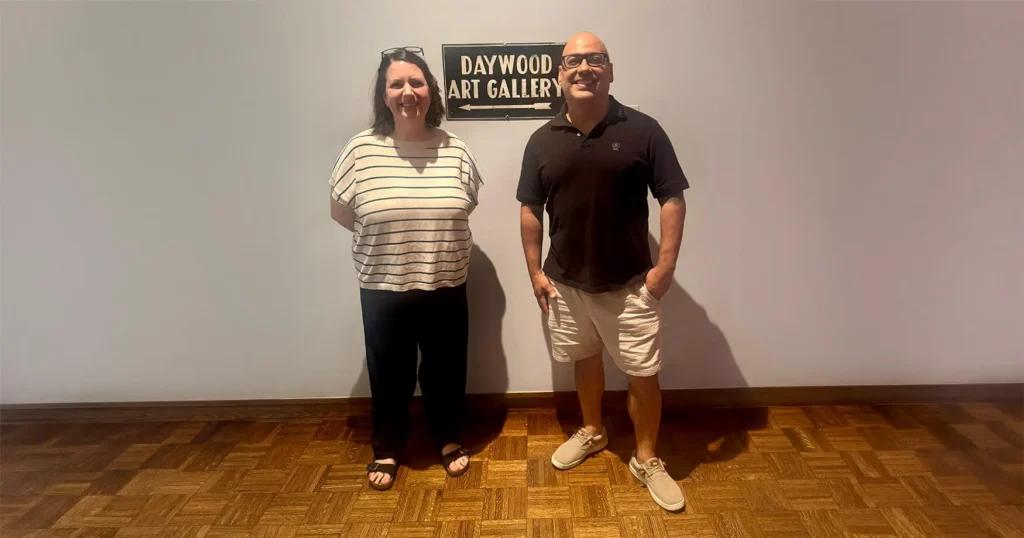
The black-and-white directional sign pictured here once pointed visitors toward the Daywood Art Gallery in Lewisburg, West Virginia — a gallery created by Ruth Woods Dayton to share the remarkable art collection she and her husband, Arthur Spencer Dayton, had assembled over decades.
Years later, the sign surfaced in a Lewisburg antique store, where it was purchased by Jose L. Rizo. Recognizing its connection to an important chapter in West Virginia’s artistic history, Jose donated the sign to the Huntington Museum of Art, where the Daywood Collection itself has been preserved for generations.
The Daytons and the Birth of the Daywood Collection
Arthur Spencer Dayton and Ruth Woods Dayton, both originally from Philippi, West Virginia, began collecting art after receiving a painting as a wedding gift in 1916. While living in Charleston, they steadily built a significant collection of American and European paintings, prints, sculpture and decorative arts.
Their interests leaned particularly toward academically trained artists working in Realism and American Impressionism. Over the years, they acquired works through galleries, major exhibitions such as the Carnegie International, auctions and directly from artists. They also developed a close relationship with New York’s influential MacBeth Gallery; archival records at the Smithsonian document correspondence with both Arthur and Ruth Dayton as well as the Daywood Art Gallery itself.
The collection would eventually include works by artists such as Childe Hassam, Robert Henri, Frank Weston Benson, Emil Carlsen, John Henry Twachtman and Andrew Wyeth, among many others. Today, the Huntington Museum of Art describes the Daywood Collection as comprising 283 works and considers it one of the treasures of its permanent holdings.
A Gallery Created to Share the Collection
Arthur Dayton died unexpectedly in 1948 at the age of 61. After his death, Ruth moved forward with a plan to make their collection accessible to others.
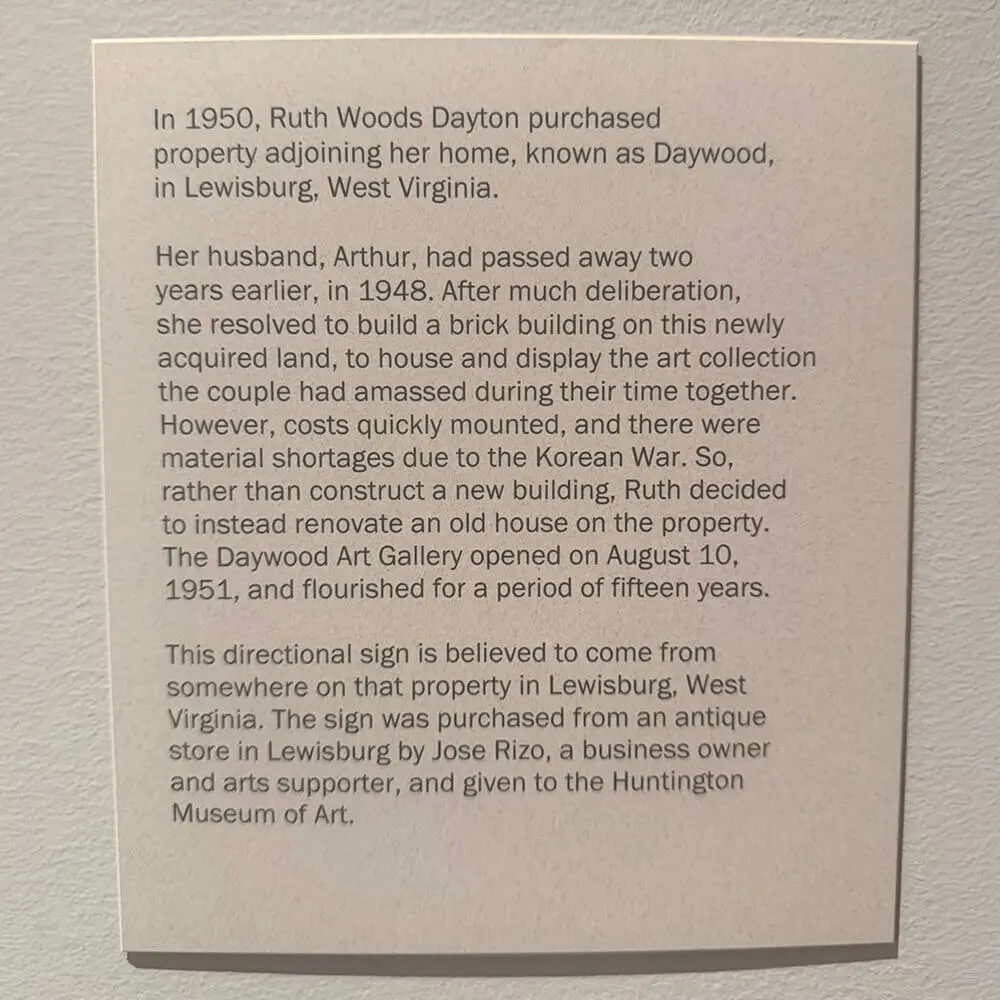
In 1950, she purchased property adjoining her Lewisburg home, known as Daywood. Her original intention was to construct a new brick building for the collection. Rising construction costs and material shortages during the Korean War changed those plans, and an existing house on the property was renovated instead.
The Daywood Art Gallery opened on August 10, 1951.
Its name joined together the couple’s family names: “Day” from Dayton and “wood” from Ruth’s maiden name, Woods. The gallery remained in operation into 1966, giving visitors the unusual opportunity to experience an important privately assembled collection in southern West Virginia.
The Collection Finds a Permanent Home
In 1967, Ruth Woods Dayton donated the Daywood Collection to the Huntington Museum of Art.
Her goal was not simply to transfer ownership, but to ensure that the collection remained intact, properly cared for and available to the public. The museum has continued that mission for nearly six decades, regularly exhibiting selections from the collection. Beginning in recent years, the museum has moved toward displaying works from Daywood on a rotating, year-round basis.
The collection remains especially significant because of its focus on late-19th- and early-20th-century American realism and impressionism — artists and periods that overlap closely with the interests that would later shape The Rizo Collection.
One More Piece of Daywood Comes Home
The directional sign survived long after the Lewisburg gallery itself closed.
According to the label now displayed with the object at the Huntington Museum of Art, the sign is believed to have originated somewhere on the Daywood property. Jose discovered it in an antique store in Lewisburg, purchased it, and donated it to the museum.
It is a modest object compared with the paintings and sculpture that made the Daywood Collection famous, but it tells another part of the story.
At one time, this sign quite literally showed people where to go to see art.
Today, preserved alongside the legacy of Ruth and Arthur Dayton, it continues to point toward something larger: a long tradition of West Virginians collecting art, sharing it with their communities, and making sure that the things worth preserving remain available to the next generation.